Birds of the Yucatan

Last Updated March 2, 2026
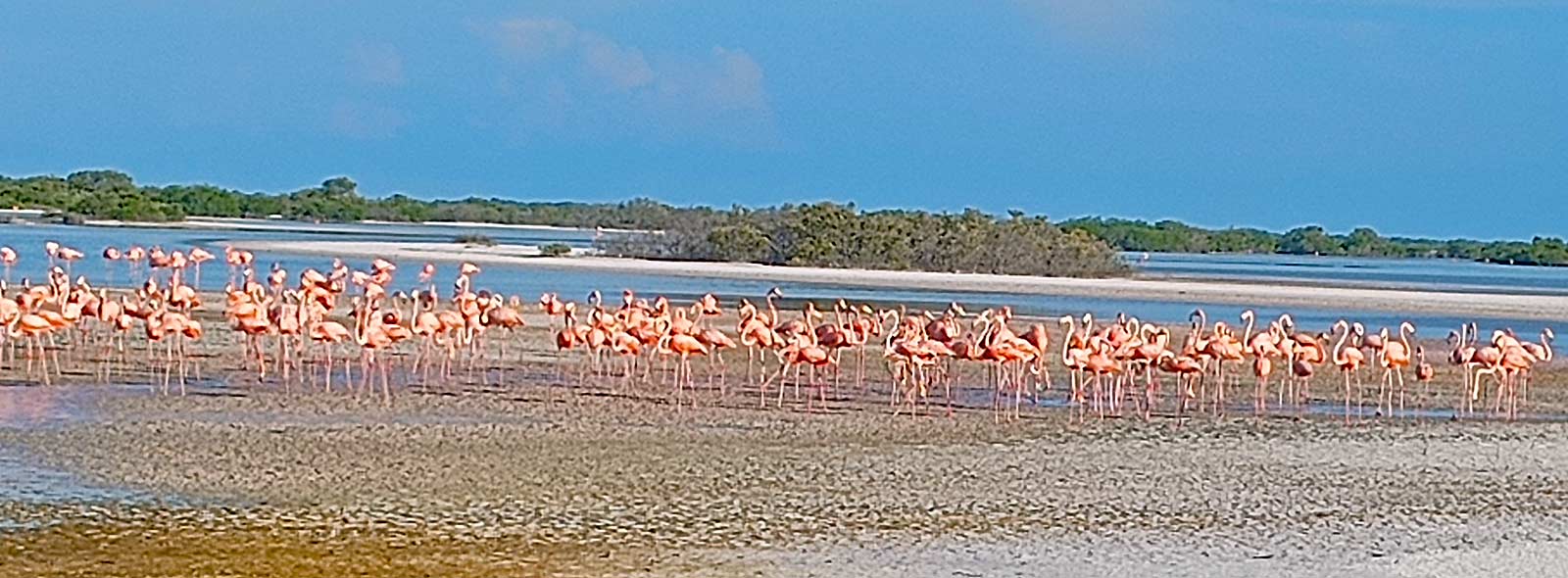
A large flock of Flamingos at Progreso Yucatan by Wonky Compass author

Bird Watching in the Yucatan: A Local’s Guide

Having called the Yucatan home for the last six years, I’ve enjoyed seeing the vast diversity of birds in the Yucatan as I’ve travelled about.

Even when I take our dog for a walk near our house, I can easily hear or see a dozen species. Mornings are often a melodious cacophony of grackles, songs of mockingbirds, the tapping of woodpeckers, screeches of hawks, and the songs of many others.

For a global birder, the Yucatan Peninsula is a revelation. While many travelers come for the turquoise waters of the Riviera Maya or the architectural marvels of Chichén Itzá, having a pair of binoculars to hand allows you to see what’s going on above you.

If you visit the city of Merida and are near in Centro, keeps your eyes open. Along Paseo de Montejo you can easily see the Golden-fronted Woodpecker (Melanerpes aurifrons), Turkey Vultures (Cathartes aura), and some other colourful birds – and look out for the two species of parrot that call Centro home. You might be fortunate enough to see either the White-fronted Parrot (Amazona albifrons) and the Olive-throated Parakeet (Eupsittula nana). It’s likely you’ll hear them before you see them!

How many bird species are there in the Yucatan?

With over 550 recorded species—representing roughly half of all bird species in Mexico—the region is a critical biological bridge.

In this guide, I’ll leverage my years of local observation and international birding experience to introduce you to the avian wonders of this limestone shelf. Whether you are a casual visitor or a serious birder, understanding the diversity here is the first step toward a truly immersive Yucatecan experience.

The peninsula’s unique geography is the secret to its success. Unlike the rugged volcanic ranges of central Mexico, the Yucatan is a flat, porous limestone platform. This creates a distinct array of habitats: the arid scrub of the north, the humid tropical forests of the south, and the sprawling mangroves of the coast.

Because of this relative isolation, the peninsula has evolved 14 endemic species—birds found nowhere else on the planet. For a birdwatcher, finding these endemics is like uncovering a local secret that has been millions of years in the making.
Strategic Birding: Where and When

To get the most out of your trip, timing and location are everything. After six years of trekking around the region, here is how I recommend structuring your birding efforts.

The Seasonal Shift

  • November to March: This is the “sweet spot.” You get our hardy residents joined by hundreds of migratory species from the North. It’s not uncommon to see a local Tropical Mockingbird sharing a tree with a Painted Bunting escaping the Canadian winter.
  • April to September: It’s hotter and more humid, but this is the breeding season for many residents. The activity is high, and the dawn chorus is at its peak.

Prime Locations

LocationHabitat TypeKey Species
Río LagartosHypersaline Lagoons & WetlandsFlamingos, Boat-billed Herons, Reddish Egrets
CelestunMangrove Estuary & Coastal ScrubAmerican Flamingo, Mexican Sheartail (Endemic), Yucatan Wren, Boat-billed Heron
Uxmal RuinsDry Forest & ArchaeologyYucatan Woodpecker, Cave Swallows, Motmots
CalakmulHumid High JungleOcellated Turkey, Keel-billed Toucan, King Vulture
Cozumel IslandInsular ScrubCozumel Emerald, Cozumel Vireo (Endemics)

Iconic Birds of Yucatan to look out for

Each has a personality that mirrors the vibrant culture of the region.

The Turquoise-browed Motmot (Eumomota superciliosa)
Locally known as the Pájaro Toh, this is arguably the most beautiful bird in the region. Look for its signature “racket” tail—two long feathers with bare shafts ending in colorful plumes. They are frequently found near cenotes, where they nest in the cool limestone crevices.

The Yucatan Jay (Cyanocorax yucatanicus)
A true endemic, these social corvids are impossible to miss. They travel in noisy family groups and are striking with their velvet-black heads and electric blue backs. If you see a jay with a yellow beak and yellow eye-rings, you’ve spotted a juvenile—they transition to black beaks as they mature.


The American Flamingo (Phoenicopterus ruber)

While many associate flamingos with the Caribbean at large, the Yucatan is home to one of the only nesting colonies in North America. The estuaries of Celestún and Río Lagartos turn a vibrant shade of coral during the winter months when thousands of these birds gather to feed on brine shrimp and algae.

Tips from a Local Expert

If you’ve birded in Europe or the US, you’ll find the Yucatan requires a slightly different approach.

  1. The “6:00 AM Rule”: In the tropics, the world wakes up early. By 10:30 AM, the heat forces most birds into the shade. If you aren’t in the field by dawn, you’re missing the best window.
  2. Respect the Maya Forest: Always stay on marked trails, especially near archaeological sites. Not only does this protect the habitat, but it keeps you clear of the “chechén” tree, which can cause skin irritation.
  3. Hire Local: While I’ve birded these trails for years, I still go with local birding experts, like Misael (see below). Their ability to identify calls in a dense jungle canopy is unmatched.

Deepening the Connection

The goal of this site, WonkyCompass.com, has been to help people get the most out of their vacation. Birdwatching in the Yucatan can be the focus of your vacation or some fun while you are relaxing on the beach or exploring the Mayan ruins.

I hope the photos throughout this article—all taken during my wanderings over the last few years—inspire you to slow down and look up. The diversity here is a fragile treasure, and as visitors, we have a responsibility to appreciate it ethically.

Photos of Yucatan Birds

Some of these are photos from my phone, so the quality isn’t great. I have a new camera now, so I will be adding high-quality photos shortly.

For more about a bird watching trip to Rio Lagartos, click this Wonky Compass Guide to Rio Lagartos

Roseate Spoonbill and other birds of the Yucatan at Rio Lagartos Square image
Roseate Spoonbill with a Snowy Egret and a Great Egret at Rio Lagartos
Juvenile Gray Hawk at Rio Lagartos, one of the more difficult birds to identify in the Yucatan
Juvenile Gray Hawk (Buteo plagiatus) at Rio Lagartos
Turquoise-browed Mot Mot in Merida, Yucatan sitting a post outside David Haggett's house
Turquoise-browed Mot Mot, locally known as the Pájaro Toh in the Mayan language, this is arguably the most beautiful bird in the region and has strong ties to Mayan culture (Phone image)
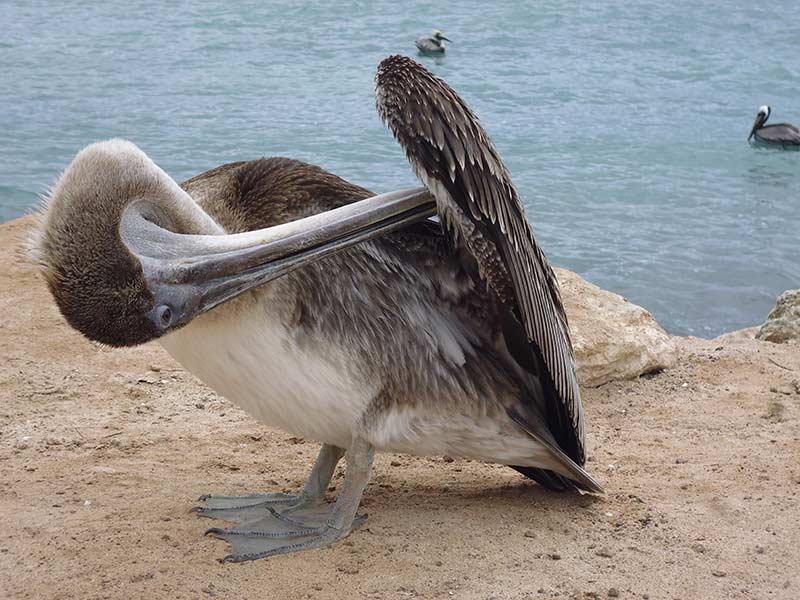
A young Brown Peilcan cleaning its feathers at the Sian Ka'an Biosphere, a great to spot birds
A juvenile Brown Peilcan (Pelecanus occidentalis) at the Sian Ka'an Biosphere
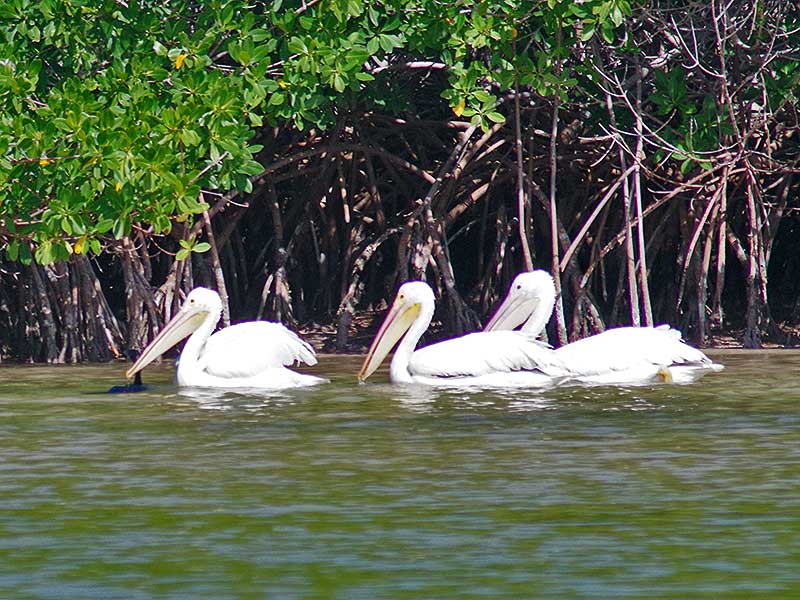
American White Pelican are common at Rio Lagartos from October to March as part of their annual migration
We were fortunate to see American White Pelicans (Pelecanus-erythrorhynchos). They are often found at Rio Lagartos during the migration season from October to March
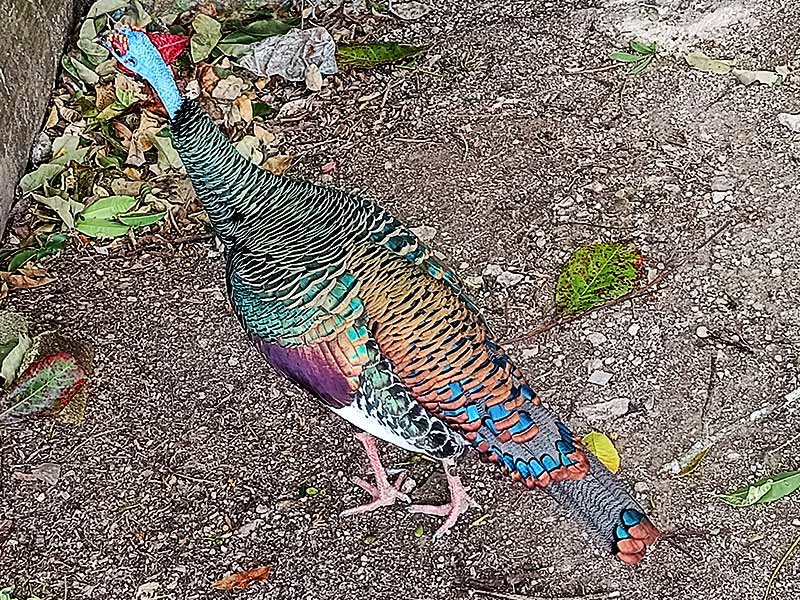
Ocellated Turkey bird running around near the entrance to the Coba Ruins, near Tulum in the Yucatan
Ocellated Turkey (Meleagris ocellata) at the Coba Ruins. Surely one of the most colorful birds in the Yucatan!
We were surprised to this White Ibis among other birds at Rio Lagartos, Yucatan
Young White Ibis (Eudocimus albus) among a lot of egrets at Rio Lagartos
Golden-fronted Woodpecker looking for bugs in the branches of a tree in our park at Merida
Golden-fronted Woodpecker (Melanerpes aurifrons), common in the park near our house in Merida, its presence obvious by the rat-tat-tat of its pecking
Boat-billed Flycatcher is one of the different yellow-breasted birds we often see in Merida
Boat-billed Flycatcher (Megarynchus pitangua), in the park near our house in Merida
White-fronted Amazon - one of the more unusual birds you can see in Merida, Yucatan. You will hear them before you see them!
White-fronted Amazon (Amazona albifons), common in Merida Centro, normally flying in small groups and making a lot of noise!
Altamira Oriole Juvenile in the late morning, feeding in a tree in the park near our house in Merida, Yucatan
Altamira Oriole (Icterus gularis), Juvenile yellow coloring in a park near our house in Merida
Altamira Oriole at Uxmal Ruins
Altamira Oriole (Icterus gularis) Adult showing orange color at Uxmal Ruins (phone image)
Tropical Mockingbird perched on a branch at Sian Ka'an, close the beach
Tropical Mockingbird (Mimus gilvus) at the Sian Ka'an Biosphere near Tulum
A Common Black Hawk sitting above us on our boat while we toured the Mangrove swamps at Rio Lagartos. A good photo taken on my phone.
Common Black Hawk (Buteogallus anthracinus) on our boat at Rio Lagartos
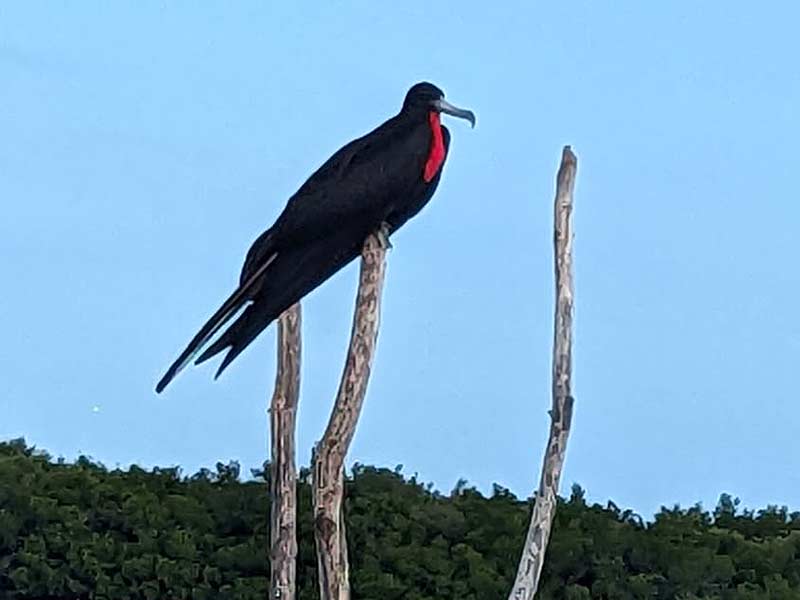
Jet black Magnificent Frigatebird sitting on a post at Rio Lagartos displaying his red pouch
male Magnificent Frigatebird (Fregata magnificens) at Rio Lagartos, displaying his red pouch
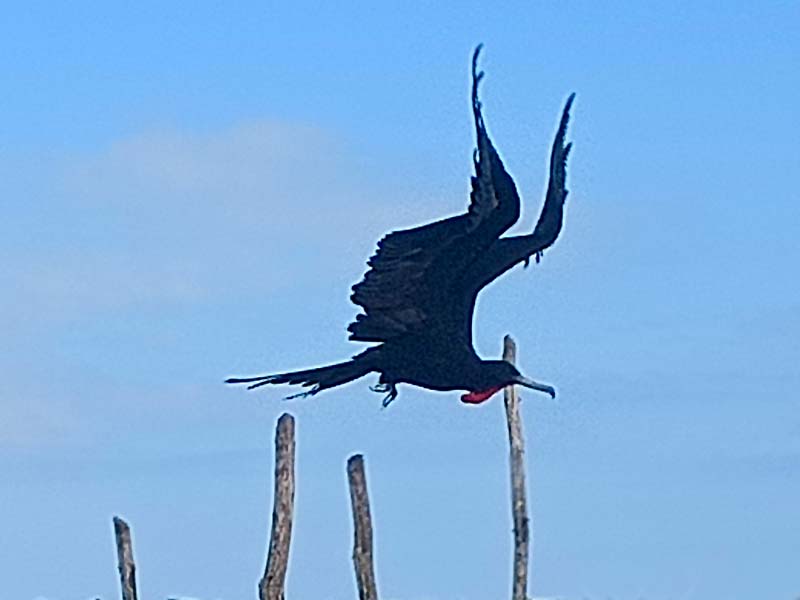
Male Magnificent Frigatebird in flight at Rio Lagartos, Yucatan as captured on my phone from the boat we were in.
Male Magnificent Frigatebird (Fregata magnificens) taking off at Rio Lagartos, showing his red throat pouch

Bird-watching Tours

If you are interested in taking a professional bird-watching tour of the Yucatan – or places further afield, such as Belize, contact either me or my friend, Misael, directly.

Misael speaks excellent English and has great experience hosting birding tours in the area.

An Important Work for Birding in the Yucatan

As many bird species in the Yucatan are migratory, it is important to keep track of what species arrive, when, and where.

Across the Yucatan, teams of bird ringers work year-round collecting this important data. 

I’ve been fortunate to join two trips, sponsored by the British Trust for Ornithology, at a site in the Yucatan, near Merida.

Members of the BTO setting up mist nets for Birds in the Yucatan. This was a fascinating day.
Setting up mist nets for checking migratory birds passing through this part of the Yucatan
Identifying a bird before ringing in the Yucatan
Identifying the correct species of Oriole before bird ringing in the Yucatan

If you’re interested in wildlife in the Yucatan or Mexico in general, checkout my selection of wildlife articles here: Mexican Wildlife.

If you like butterflies, take a look at my page of Butterflies of Mexico