Birding in Progreso, Yucatan: 2026 Flamingo & Endemic Guide

Birding with American Flamingos at the salt flats at Progreso, Mexico

An early morning Birding Trip to Progreso, Yucatan

Keen to try out my new camera, 6:00 am on Sunday, March 29th, 2026, found me at a turning off the Highway 35 road to go birdwatching in Progreso. There, I joined Misael Zozaya, a professional Yucatan-based birdwatching guide. Our group numbered nine individuals and included three members of the BTO (British Trust for Ornithology) from the UK.

The track we explored runs through a mix of sand flats, mangrove, and scrub woodland, making it an ideal birdwatching spot. We finished at 10:30 am as the sun was high and getting very hot. The number of sightings had dropped off by this time as well. Despite this, we saw 31 confirmed species—an excellent result for a four-hour session.

This location is a key birding spot in the area, due to its diverse habitats. It’s a current hotspot on eBirds

We first saw coastal birds, flamingos, shorebirds, and waders, then, as we walked further along the track,  shrubland and wooded species. With sand banks, salt flats, mangrove, grasslands, and woodland, it makes for great birdwatching in Progreso, Mexico.

This was a new area for me and a great birdwatching spot near Merida.

Highlights for me were the sighting of the Merlin perched on a dead tree in the lagoon and the Rufous-naped Wood-Rail lurking on the edge of the brackish water.

Birding group checking out wading bird species near Progreso Yucatan
Part of our Sunday birding group checking out a group of waders
Least Bittern, cleverly hiding among the mangrove roots with clever camouflage
Least Bittern (Botaurus exilis), one of the best sightings of the day was quietly sitting at our feet unnoticed for several minutes!

How to Get to the Progreso Birding Route from Merida

If you’re coming from Merida, take the Carretera Federal 261. From the Merida Periferico to the Progreso roundabout, the road is straight and in excellent condition. This part of the journey is only 17 miles (27km) and takes about 22 minutes. Once you reach the roundabout, turn right along the YUC 27 to Chicxulub for about 3.5 miles (5.6km). Look for a turning on your right.

You don’t need a guide for this key location for birdwatching in Progreso. This is an easy path to walk and, with a 4×4, an easy drive.

A bird-watching guide is helpful – without Misael we would have missed some great birds. Experienced birders, however, will find this an ideal self-guided spot.

Even if you’re not an expert, this is still an ideal location to see common birds in Progreso, Yucatan. But you can be sure to see some rare and unusual birds as well!

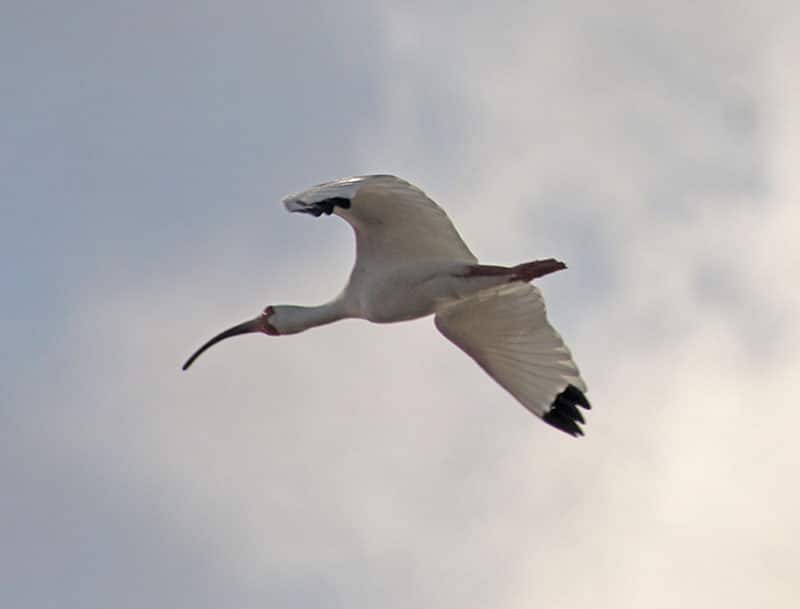
White Ibis in flight over the lagoons at Progreso
White Ibis (Eudocimus albus), part of flock flying overhead at the lagoons
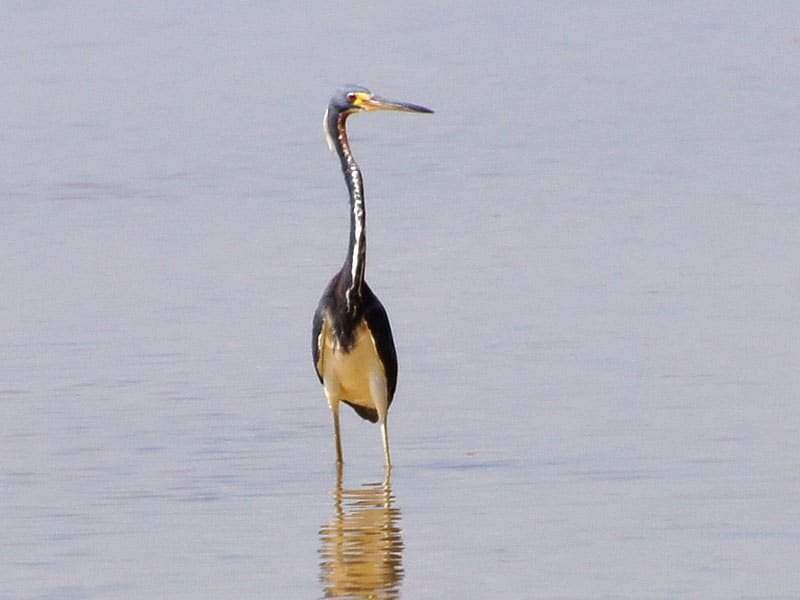
Tricolored Heron, standing erect in the waters of the Progreso wetlands and lagoons
Tricolored Heron (Egretta-tricolor) wading close to the shore at the start of our walk
Black-necked Stilt is one of many waders we saw in the lagoon in large groups
This Black-necked Stilt (Himantopus mexicanus) was one of many that frequented the shallows close to main road.
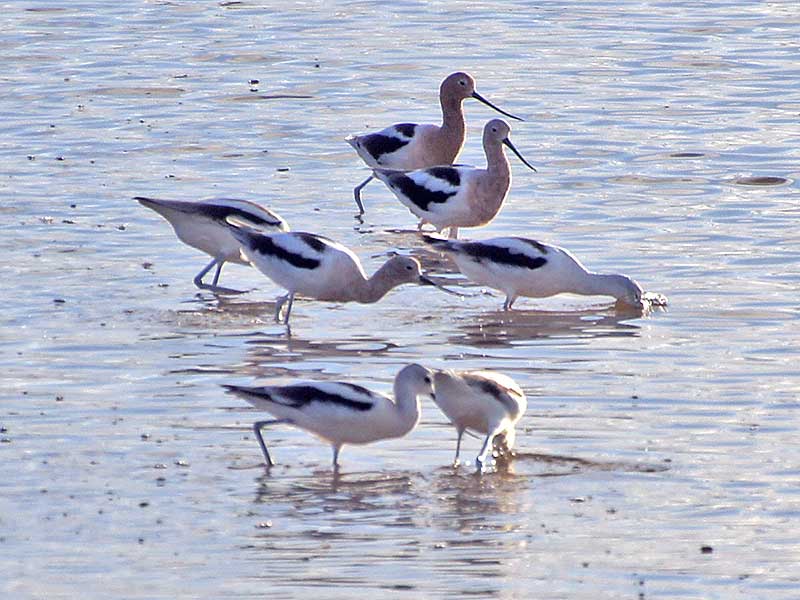
AmericanAvocet is another nice find at progreso, with its upturned beak.
This group of American Avocets (Recurvirostra americana) was one on many wader species we saw

Where to See Flamingos in Progreso, Yucatan

While large colonies of flamingos are often seen in Celestún or Río Lagartos, Progreso’s coastline is now a significant corridor for flamingos. You don’t always need a long trip to spot them as they’re common in wetlands surrounding the port.

La Ría Progreso

This is one of the most reliable spots for those staying close to the main town. It’s also ideal, as you can find elevated viewing towers, Miradores, that offer an elevated perspective over the mangroves, which is essential for spotting birds hidden in the thicket.

The towers offer a panoramic view of the lagoon where flamingos often congregate in small groups. You can take boat tours through the channels to get closer to the feeding grounds without disturbing the wildlife.

Reserva Ecológica El Corchito

This reserve provides a land-based entry point into the local ecosystem. It is a unique location where freshwater springs (cenotes) interact with the brackish lagoon, creating a habitat that attracts a variety of wading birds. Visitors can observe flamingos, shorebirds, and various other species in their natural environment along the developed trails.

Chelem and Chuburná

The stretch of road heading west toward Chuburná Puerto is a hidden gem for birders who prefer a “self-drive” approach. The shallow lagoons that run parallel to the coastal road (often referred to as the “Laguna Rosada” or “Costa Esmeralda”) are frequent stopover points for flamingos.

The causeways and quiet side roads let you pull over safely and observe the birds from your vehicle. The lack of heavy boat traffic in these smaller lagoons often means the birds are less skittish than in the more famous reserves.

Single American Flamingo against sunlit water
The early morning light highlights an American Flamingo against sunlit water
Four flamingos feeding in the shallows along the Ruta Costa Esmeralda de Yucatán
Part of a group of flamingos feeding, with the early morning sun giving them a strong pink hue

The Four Key Birding Ecosystems in Progreso

Many visitors see Progreso as just a cruise port, but the area actually contains a rich mix of distinct ecosystems. To observe the widest variety of species while birdwatching in Progreso, you must move between four main biospheres. We were fortunate that the spot we chose on Sunday incorporated all four.

Progreso is one of the best spots along the Gulf of Mexico for birding due to its variety and diversity of habitats. The four biospheres below are all easily accessible by the average bird watcher, without the need for guides, boat trips, or long trails. Being on an important seasonal migration route means that twice a year, the number of possible bird sightings increases dramatically, lifting the potential species to over 200.

Let’s explore some of the biospheres:

  • Mangroves: Dense networks of Red and Black mangroves serve as a sanctuary for species like the Tricolored Heron (Egretta tricolor) and the Least Bittern (Ixobrychus exilis). The thick canopy makes patience a necessity; you’ll often hear the rustle of life before you see it.
  • Lagoons: Just inland lies the Ría Progreso. These shallow, hypersaline waters are the main food source of the region and primary habitat of the American Flamingo (Phoenicopterus ruber).
  • Beaches and Dunes: The Gulf coastline and scrubby dunes are home to aerial acrobats such as the Royal Tern (Thalasseus maximus) and Magnificent Frigatebird (Fregata magnificens).
  • Salt Flats: These areas are frequented by shorebirds like the Black-necked Stilt (Himantopus mexicanus) and the Spotted Sandpiper (Actitis macularius), both foraging along the salt-crusted edges.
Salt flats and isolated mangrove trees make an ideal birding location
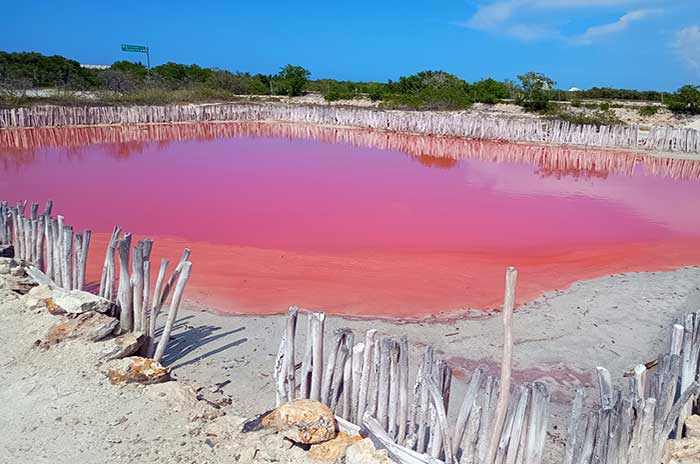
The pink lagoon shows the rich nutrients. Sitting at the top of the nearest mangrove bush was a Merlin (impossible to see without binoculars)
A track used by birders in Progreso
The main track from the main road, through the shallow and here, between the mangroves and scrubland

Yucatan Bird Migration: When to Visit Progreso

As a vital stop on the Atlantic Flyway, Progreso stands out as a premier destination for Neotropical migrants. These birds visit during both Spring (March–May) and Winter (November–February), so if you expect to go birdwatching in Progreso, plan your trip to catch the shifting populations throughout the year.

  • Winter (November – February): As temperatures drop, over 200 species from North America escape the freeze by gathering here, including the American White Pelican and various waterfowl.
  • Spring Migration (March – May): Our March 29th trip hit the heart of this high-energy period. It is the best time for “migratory fallouts,” as winter residents prepare to leave and summer residents arrive. Not that the peak numbers drop off after March.
  • Summer (June – August): Although this is a quieter period for migrants, it’s an ideal season for observing the resident breeding behavior.
  • Fall Migration (September – October): This is the peak period for southbound Neotropical migrants. During these months, the coastline acts as a critical “refueling station” for tired songbirds and raptors. You can expect high counts of Warblers, Vireos, and Flycatchers arriving from across the Gulf.
Northern Parula is a small bird, lurking among the bushes, making it hard to get a good photo
Northern Parula (Setophaga americana), like many of the small birds on this trip, it flitted in and out of the bushes, making it hard to photograph
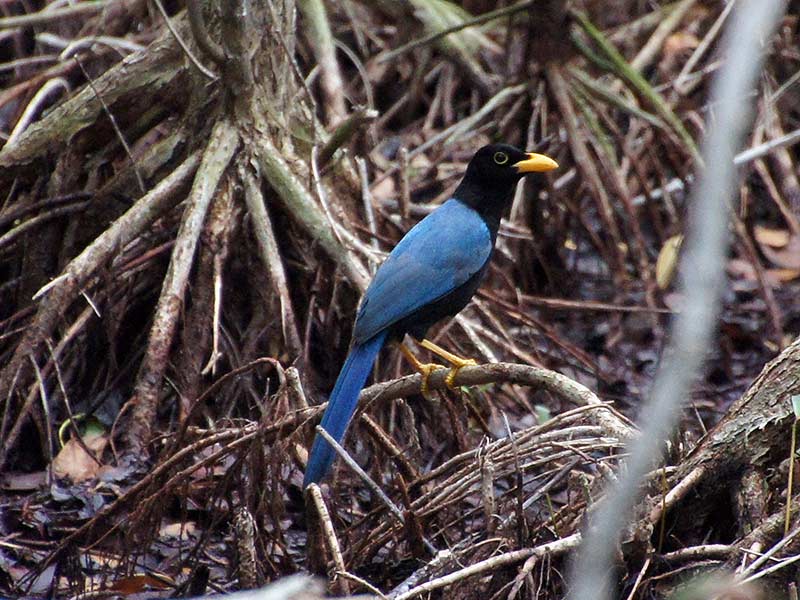
Yucatan Jay, a bird with bright blue wings, commonly seen in Progreso
Yucatan Jay (Cyanocorax-yucatanicus) with its signature yellow bill foraging among the mangrove roots

Birdwatching Gear Essentials for the Yucatan

The Yucatan climate can be unforgiving if you aren’t prepared. To ensure a productive 6:00 am start, make sure you have the following:

  • Optics & Gear: Bring a good pair of either 8×42 or 10×42 binoculars. For photographers, a lens with a focal length of 400 to 600mm reach is recommended for the lagoon views. Although mine is only 270mm, I can still get reasonable shots. If you have access to a longer lens, so much the better!
  • Sun & Heat Protection: A wide-brimmed hat and lightweight, long-sleeved “fishing style” shirts are more effective than sunscreen alone. The sun reflects intensely off the white salt flats.
  • Insect Repellent: The mangroves are home to “no-see-ums” and mosquitoes, especially in the early morning.
  • Hydration: Bring more water than you think you need. By 10:00 am, the humidity and temperature rise rapidly.
  • Footwear: Sturdy, closed-toe walking shoes or light hiking boots. You will be navigating sandy tracks and occasionally muddy edges near the lagoons.

Progreso Bird Species List: 31 Confirmed Sightings

This is a list of the confirmed bird species we saw in Progreso on 29th March 2026. There were, maybe, a dozen other species we saw but couldn’t be certain with the identification. That was either due to distance or very brief sightings.

Land & Scrub Birds

  • Turquoise-browed Motmot (Eumomota superciliosa)
  • Yucatan Jay (Cyanocorax yucatanicus)
  • Ferruginous Pygmy Owl (Glaucidium brasilianum)
  • Green Jay (Cyanocorax yncas)
  • Northern Cardinal (Cardinalis cardinalis)
  • Rufous-browed Peppershrike (Vireolanius melitophrys)
  • Golden-olive Woodpecker (Colaptes rubiginosus)
  • Common Tody-Flycatcher (Todirostrum cinereum)
  • Tropical Mockingbird (Mimus gilvus)
  • Blue-gray Gnatcatcher (Polioptila caerulea)
  • Cinnamon Hummingbird (Amazilia rutila)
  • Yucatan Gnatcatcher (Polioptila albiventris)

Waders & Waterfowl

  • American Flamingo (Phoenicopterus ruber)
  • American Avocet (Recurvirostra americana)
  • White Ibis (Eudocimus albus)
  • Tricolored Heron (Egretta tricolor)
  • Least Bittern (Ixobrychus exilis)
  • Black-necked Stilt (Himantopus mexicanus)
  • Spotted Sandpiper (Actitis macularius)
  • Killdeer (Charadrius vociferus)
  • Willet (Tringa semipalmata)
  • Russet-naped Wood-Rail (Aramides albiventris)

Aerialists & Predators

  • Royal Tern (Thalasseus maximus)
  • Laughing Gull (Leucophaeus atricilla)
  • Vaux’s Swift (Chaetura vauxi)
  • Magnificent Frigatebird (Fregata magnificens)
  • Brown Pelican (Pelecanus occidentalis)
  • Turkey Vulture (Cathartes aura)
  • Merlin (Falco columbarius)

Orioles & Blackbirds

  • Hooded Oriole (Icterus cucullatus)
  • Altamira Oriole (Icterus gularis)
  • Yellow-tailed Oriole (Icterus mesomelas)
  • Red-winged Blackbird (Agelaius phoeniceus)

Progreso Day Trip from Merida: Salt Lakes and Xcambó Ruins

One of the pink lakes at Laguna Rosada near Progreso
A pink lake at Laguna Rosada
Xcambo Mayan Ruins from the top of one of the pyramids

Despite the early start, this was a great day trip from Merida. It was a reasonably short drive to get to the birding hotspot in Progreso. We finished around 10:30 am and went to Vistamar Beach Club in Chicxulub for some much-needed refreshments and snacks.

From there, our small group drove to the Xtampú Salt Flats (Salinas de Xtampú), which is another 30-minute drive along the YUC 27. These pink lagoons are very pink! Two of the party swam in the lakes – they regretted not rinsing off properly, as the high salt concentration can be caustic! (For more details, see Pink Lakes near Progreso).

After 30 minutes at the Salt Lakes looking for waders and flamingos, we moved on to Xcambo, a Mayan ruin often overlooked, despite being so close to Progreso. There, we also found plenty of Orioles and Tropical Mockingbirds.

For about the Xcambo, click here: Xcambo Mayan Ruins near Progreso

One of the highlights for us was the flock of four or five Olive-throated Parakeets (Eupsittula nana) that kept flying across the ruins, making their iconic raucous noise as they passed by.

Overall, this was a great day trip from Merida: birdwatching, delicious food, swimming in pink lagoons near Progreso, and climbing Mayan ruins at Xcambó!

For more day trips from Merida, click on the link: Best day trips from Merida

If you are vacation in Progreso and want to find out more about what to do and where to go, click on Fun things to do in Progreso

A Yellow-tailed Oriole, feeding on red flowers at Xcambo Mayan ruins in Progreso
Yellow-tailed Oriole (Icterus mesomelas), one of several lovely birds sighted at Xcambo ruins
Tropical Mockingbird, a common grey-colored bird seen at Progreso and across the Yucatan
Tropical Mockingbird (Mimus gilvus) sitting among the shrubs